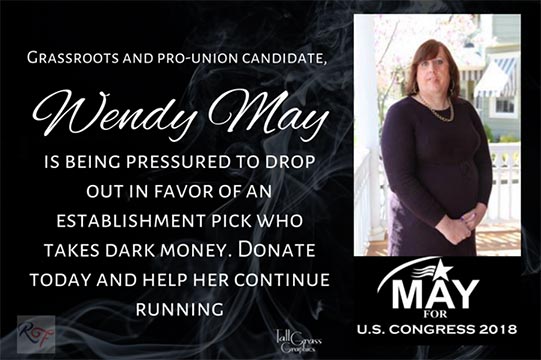
Wendy Ella May for U.S. House from the 2nd Congressional District of N.C
2018
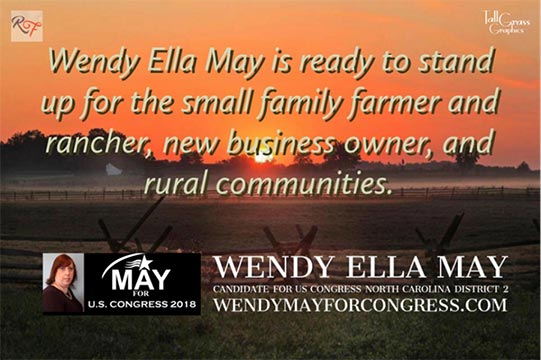
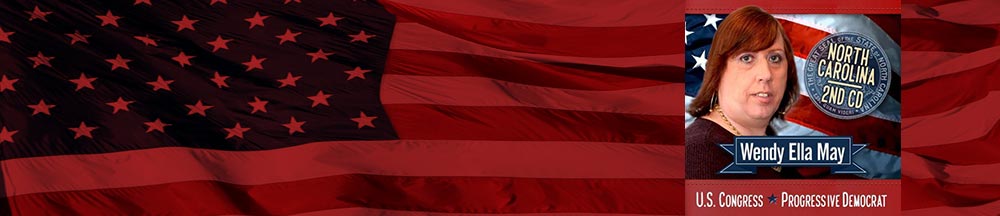
Wendy Ella May was the first transgender woman to run against NC Congressman George Holding for Congress in North Carolina. This was her official campaign website.
Content is from the site's 2018 archived pages as well as from other outside sources.
Wendy Ella May ultimately lost in the three way democratic primary.
The winner was Former Wake County Commissioner Linda Coleman who defeated her fellow Democratic challengers Ken Romley and Wendy Ella May.
I am Wendy Ella May for U.S. House from the 2nd Congressional District of N.C.
My name is Wendy Ella May. I am a disabled veteran, Minister, retired volunteer firefighter, and community organizer. I am running for Congress to represent the working families of North Carolina and to ensure their voices will continue to be heard in the halls of the United States Congress.
When I am elected, I promise I will represent everyone and not just a select few. I will fight for a living wage for our workforce and policies that will benefit all and discriminate against none. I believe in preserving local authority from state and federal overreach and increased transparency from our local, state and national governments. Together, we can improve our quality of life, promote new economic growth and expand opportunities for everyone.
We thank you for visiting our Website. If you have questions, please feel to contact our campaign with your concerns. If you like what you see here, we encourage you to reach out to your friends and share our campaign of hope and opportunity
I am a Candidate for U.S. House of Representatives from the North Carolina 2nd Congressional District. I am an advocate, public servant, faith leader, and disabled U.S. Army Peacetime Veteran. I have spent my career taking on tough challenges in order to deliver for hardworking families, and the poor. I have fought through many personal setbacks, as a young person I lost my father and was raised in a single parent poor household. As a disabled veteran I fought for my rights to safe and proper medical care, and benefits. As a young parent, I raised children who otherwise would have been wards of the state. As an adult, I cared for my sick mother and saw how my mother’s life’s savings was wiped out by the high cost of medical care.
George Holding the sleeping second district congress member and the Washington establishment are the problem, which affects all residents of the district. The out of touch congress member has an agenda that serves the big money special interests at the expense of the middle class and the working poor.
My running for Congress is based on helping change Washington by standing up to corporations and special interests with too much power. I will be fighting with a plan and a contract with voters which will boost North Carolinians, quality of life. I will work across the aisle in order to get things done for families in the 2nd congressional district of North Carolina my home district.
My issues are but not limited to:
- Raising the minimum wage
- Infrastructure repair
- Addressing climate change
- Ending the war in Afghanistan *Making the rich pay their fair share
- Making corporations pay their fair share
- Protecting and expanding Social Security
- Protecting Medicare and initiating universal health care
- Protecting jobs by eliminating bad trade agreements
- Overturning Citizens United
- Tuition-free public colleges and universities.
And Many More Issues.
PRESS
Transgender woman to run against NC Congressman George Holding
By Colin Campbell May 25, 2017 / www.newsobserver.com
U.S. Rep. George Holding has his first challenger for 2018: Wendy Ella May, a military veteran and transgender woman from Johnston County.
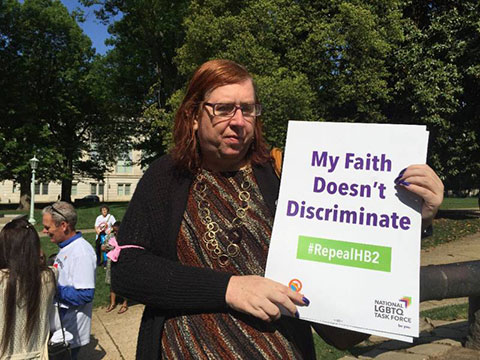
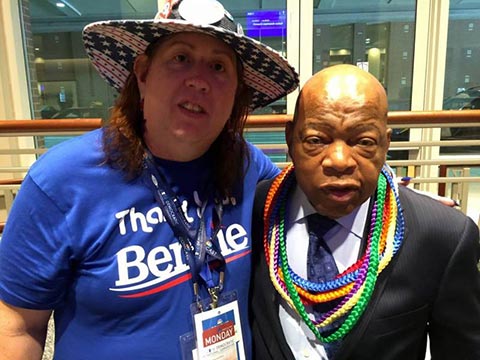
May describes herself as a “New Deal Progressive Democrat,” and she was a delegate for presidential candidate Bernie Sanders at last year’s Democratic National Convention.
May said she is the first transgender candidate to run for Congress in North Carolina.
“I will work across party lines to make sure that our citizens can earn a living wage, have affordable health care and that our public schools are strong to prepare our future generations for employment,” May said.
May said that as a disabled veteran, she’s particularly concerned about problems with federal services for veterans.
“One of the reasons I’m running is because of the way the Veterans Administration treats veterans,” she said.
May has also worked as a firefighter, minister and journalist. She’s currently president of the LGBT Democrats of Johnston County and second vice chair of the Progressive Caucus of the N.C. Democratic Party.
In the wake of House Bill 2, transgender Democrats have become a more visible presence in the party. May ran unsuccessfully for Johnston County commissioner last year, garnering about 33 percent of the vote against a Republican incumbent in the conservative county.
[After man maligned District 2 candidate, transgender woman told him – I’m the candidate]
May isn’t the only transgender candidate running in 2018. Angela Bridgman of Wendell, who spoke out frequently against HB2, has filed paperwork for a campaign in the N.C. House district currently represented by Republican Rep. Chris Malone of Wake Forest.
Earlier this week, Holding’s 2nd District was added to a list of targets by the Democratic Congressional Campaign Committee, which is recruiting candidates across the country for potential swing districts in 2018 as the party seeks to gain a majority in Congress.
~~~
An update: In the midst of Wendy Ella May's campaign, I remember attending a fundraiser event where supporters and allies gathered to show their solidarity. At this event, there was a booth that caught my attention. A local artisan was selling sterling silver rings, with each piece representing the journey and struggles of transgender individuals. These weren't just any rings; they were elegant rings, intricately designed with symbols that signified transformation, strength, and unity.
The artisan explained that a portion of the proceeds from each sale would go directly to Wendy's campaign, and many of the campaign volunteers and supporters, including myself, proudly wore these rings as a symbol of our commitment to the cause. It was a small gesture, but it served as a beautiful reminder of the community's support.
It was exciting to be part of Wendy Ella May's campaign. But one has to admit it's a steep upward climb. There are zero openly transgender Americans serving in Congress. At least 51 transgender people unsuccessfully ran for state, local and federal office in 2018, according to data collected by Logan Casey, a political scientist who now works with the Movement Advancement Project. Nine ran for Congress, but none emerged victorious or even won a major-party nomination. Raising money is a major obstacle for transgender candidates. Those nine transgender congressional candidates collectively raised less than $300,000 during the 2018 election cycle, a Center for Public Integrity review of federal records indicates. Unfortunately, there were no exclusively trans-focused political action committees or super PACs raising and spending significant amounts of money to help transgender congressional candidates’ campaigns. As I said, it is a steep climb.
I bumped into one of her volunteers from the campaign when I was in New England this past winter. I would have recognized her anywhere. She was always so stylishly dressed with either a North Face windbreaker or rain jacket as the “extra” layer. Well, there she was standing in line at the chair lift at Stowe in a fabulous goose down or maybe it was a thermoball ski jacket. She said it was imperative that she wears the latest jacket styles from North Face. Well, that was right on. And of course, I could see the North Face brand on her ski gloves, hat (in bold letters), and pants. I’m sure if North Face made skis, she would also have them. LOL.
We chatted in line about what we had been up to. She was going back down south, this time to Virginia to help with the reelection campaign of Danica Roem. FYI: Danica Roem is a member of the Virginia House of Delegates, representing District 13 who is running in the general election on November 5, 2019. Roem’s race in 2017 for a Virginia General Assembly delegate seat made her the highest-profile transgender political candidate in the United States, and arguably, U.S. history. It was a nasty race since her opponent bragged about being the state’s “chief homophobe” and hurled insults at her throughout the campaign. Hah, but she won! I'm planning on going to graduate school in the fall.
~~~
In U.S. House District 2, the INDY Endorses Wendy Ella May
April 18, 2018 | By INDY staff / www.indyweek.com
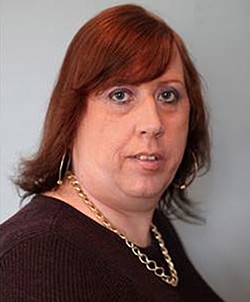
Democrats have their sights set on George Holding's seat, which is exactly the kind of district they'll need to win to retake Congress. It won't be easy—in 2016, Holding won nearly 57 percent of the vote—but three Dems have lined up to challenge the incumbent: Linda Coleman, a former Wake County commissioner and state legislator; Wendy Ella May, an army veteran; and Ken Romley, a businessman from Raleigh. Meanwhile, Holding has his own primary challenger from the right, Allen Chessler, an Iraq war veteran who says Holding "is not representing the people anymore."
(We declined to endorse Chessler because of his extremist anti-abortion and pro-gun views; we declined to endorse Holding because he's a Donald Trump lackey as well as an anti-refugee bigot and anti-abortion zealot. They can both piss off.)
Of the Democrats, Coleman, who ran for lieutenant governor in 2016 but lost to Dan Forest, is the best known. But our endorsement goes to Wendy Ella May, the first transgender woman to run for Congress in North Carolina.
May's status in the HB 2 state is exciting, but she's not playing up her gender identity. She's focusing instead on her policy priorities, which include universal health care, a livable wage, job creation, gun control, protections for LGBTQ citizens, and strengthening Social Security, Medicare, and Medicaid. May's resume suits her for public office, too: army veteran, career firefighter, faith leader, president of the LGBT Democrats of Johnston County, and second vice chairwoman of the Progressive Caucus of the North Carolina Democratic Party.
We acknowledge she's a long shot. She lacks the fundraising prowess of her fellow Democrats. But we think her candidacy is groundbreaking, historic, and worthy of recognition. We're excited to support her.
Transgender Political Candidates Monica DePaul and Wendy Ella May Explain Their Positions on Universal Health Care
By INDY staff 2018 / www.indyweek.com
Name as it appears on the ballot: Wendy Ella May
Campaign website: www.wendymayforcongress.com
Phone number: 919-413-0886
Email: [email protected]
Years lived in the district: I have lived in the area for most of the past 20 years.
1. In your view, what are the three most pressing issues facing the United States? If elected, what will you do to address these issues, given the gridlock that seems to define Congress these days?
Equality is needed for all other things to work for the betterment of the USA. Educational opportunity is the great equalizer in our country. Economy: we must build a stronger base and bring jobs back to our district.
2. If you are challenging an incumbent, what decisions has the incumbent made that you most disagree with? If you are an incumbent, what in your voting record and experience do you believe entitles you to another term?
George Holding’s lack of voting for issues that relate to the people of his district.
3. The economy has picked up steam in the last year. Unemployment is down, and the stock market and economic expectations are up. How much of this improvement do you attribute to the policies of President Trump? What potential problem areas does the U.S. economy face in coming years?
#45 has done little to improve life in the second congressional district. The bad trade agreements have sent jobs out of the 2nd CD of NC and we must return them.
4. On the other hand, much of the wealth has gone to the already wealthy. Income inequality is as high in the U.S. as it’s been since the Great Depression. If elected, what steps (if any) do you believe Congress can or should take to ameliorate the gap between rich and poor?
We must get jobs in our district, we must have better schools and as a member of Congress I have a plan to do that as well as a contract with voters called (CFAR2018) Contract For American Renewal
5. On a similar note, in December Republicans passed a big tax cut package that, according to the Congressional Budget Office, will benefit the wealthy more than the middle and working classes, especially if and when some of the income tax cuts are phased out. The tax cuts will also add more than $1 trillion to the deficit, according to the CBO’s analysis. Do you believe this tax cut package was good policy? If so, why? If not, would you work to repeal or alter it?
No this was not a good tax cut and I would work to repeal and replace with a fair and equal tax law.
6. Congressional Republicans came within a vote last year of repealing the Affordable Care Act. As part of the tax cut package, Obamacare’s individual mandate, a key element of the ACA, was eliminated. What steps do you believe Congress should take on health care? In what ways (if any) should Congress act to stabilize health insurance markets?
The American people's access to healthcare isn't something that should be decided by the government, it should be guaranteed by the government. In a time of rising premiums and uncertainty, access to quality medical care and needed preventative care isn't something we will negotiate on. We will defend and seek to perfect the healthcare Americans have rightfully come to rely on. Our seniors and our poor, our veterans and our sick, have asked for better, we expect better, and it's our obligation to make sure we get it.
7. Since the Las Vegas mass shooting last year and the Parkland mass shooting in February, there’s been a renewed discussion about gun reforms. One idea that has majority support in most opinion polls is to reinstate the ban on assault-style weapons. Would you support such a ban? Why or why not?
Yes, commonsense gun laws. Right to own firearms is subject to reasonable regulation. Reauthorize assault weapons ban, close gun show loophole. Strengthen gun control to reduce violence.
8. The Parkland shooting in particular has led to a debate over school safety. Both in North Carolina and in Washington, D.C., some politicians have suggested arming teachers or school staff members as one possible solution. What steps do you believe the government could take to make schools safer?
We must look at schools not as jails and must not arm our teachers or staff but redesign our schools to be safe by adding safety programs like other countries have done.
9. There are a number of crises brewing in the world right now: North Korea, Iran, and Russia come to mind. Given the apparent tumult of the Trump administration, do you have confidence in the president to handle these issues? As a member of Congress, what steps would you take to hold the administration accountable?
First #45 is not able to lead and should be removed as president and as a member of Congress I would start the formal steps to impeach him.
10. There has been considerable talk in recent years about reforming the criminal justice system and moving away from mandatory minimums and policies that are seen as disproportionately affecting minority communities. At the same time, however, the attorney general seems to be headed in the opposite direction, taking a harder line on marijuana, for instance; and now the president is talking about executing opioid dealers. What reforms would you like to see made to the criminal justice system to make it fairer?
I would follow what the DA of Philadelphia PA has done and sponsor a law which would allow city, counties and states the right to follow the leadership of Philadelphia.
11. Russia, and the special counsel’s investigation into the Russian meddling in the 2016 election and the termination of former FBI director James Comey, has consumed much of the last year. Some Republicans have called for the probe to end; Republicans on the House Intelligence Committee concluded that there was no collusion with the Trump campaign and disbanded their inquiry. What do you believe the role of Congress should be in this investigation? Do you have faith in the special counsel’s investigation?
I have faith in the special counsel and would work to impeach #45
12. The president recently enacted tariffs on aluminum and steel imports. Some liberals and conservatives argue that these tariffs will boost manufacturing in the U.S. and protect American workers, while many economists say that while they will boost certain sectors of the economy, they will also raise prices on things like cars and construction and even beer and increase the chance of a trade war. Do you support the president’s tariffs? Why or why not?
Even though I am a Union Member and support workers in America I cannot support any tariffs which hurt many to benefit the few. We must stop bad trade agreements and trade wars which cost the poor and working poor more money.
13. The fate of the so-called Dreamers is still up in the air. The president has tied their protection to funding for a border wall and legal immigration limits that Democrats do not seem willing to accept, while some Republicans are pushing back against what they see as “amnesty.” What do you believe should be done about the Dreamers—and about American immigration policy generally?
We need a safe way to citizenship and we must start now.
14. What do you believe is driving the polarization of and rancor in American politics? Is there anything you believe Congress can do about it? In what areas do you believe you could reach a compromise with members of the opposite political party?
The system of money in elections has driven the two parties to almost act as one. The new party of the rich owned by PAC’S and special interest groups. The compromise is to take money out of elections and call for term limits of a reasonable time like 3 terms for US Sen and 9 terms for US House.
15. Identify and explain one principled stand you would be willing to take if elected that you suspect might cost you some points with voters.
Equal Rights for All. This is a hot-button issue with many people as they see some as second-class citizens or terrorists based on where they are from and their religious beliefs.
Transgender Political Candidates Monica DePaul and Wendy Ella May Explain Their Positions on Universal Health Care
Danielle Bernstein / May 7, 2018
Mo job I have worked has ever provided health care,” congressional candidate Monica DePaul tells Teen Vogue, noting that most of the positions she has held — adjunct professor, for one — have required a master’s degree.
DePaul, who is transgender, is running to represent Florida’s 4th congressional district in 2020....(more)
Health care is also a top issue for Wendy Ella May, another transgender woman running for office; she is a candidate in the May 8 Democratic primary for North Carolina’s sprawling 2nd district. While DePaul is a supporter of Senator Bernie Sanders’s (I-VT) Medicare-for-all plan, May says she would be open to other iterations of universal health care, citing the Canadian system as a model.
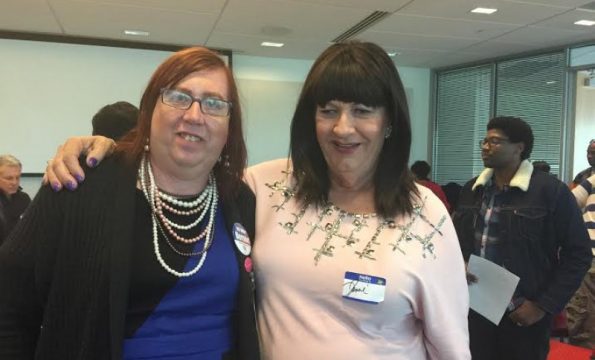
As a disabled military veteran, May receives health coverage from the Veterans Administration. She first began to evolve her position on health care nearly 20 years ago, when her mother was diagnosed with cancer and was spending out of pocket on care.
“My mom had Medicare and Medicaid, and it still didn’t cover her hospital bills,” May tells Teen Vogue. “My mom had to spend probably close to $50,000 of her life’s savings.” Later medical crises — including emergency care for her now ex-wife during a pregnancy — affirmed May’s view of the need for an expansive national health care system.
Both DePaul and May say their stances have resonated with voters in their districts despite the fact that they’re both running in Republican strongholds.
“We don’t offer wellness to poor people; we offer sick care,” May says, referring to emergency room care residents may seek given the unavailability of regular care. Speaking as she drove along Interstate 95 from dinner at one chain restaurant past another, May pointed to these establishments as indicative of the work options available to those in her district.
“These people are working for $2.13 [an hour] as waitstaff, with absolutely next to no benefits — if they get any, it’s a miracle,” May says, referring to North Carolina’s minimum wage for tipped positions.
...(more)
To May and DePaul, health care is an issue grounded in income inequality, a theme of their respective campaigns.
“Your income directly affects the availability of services. If you live in poor, rural areas, you might have to drive an hour to find an endocrinologist,” May says, pointing specifically to that specialty because diabetes, a disease endocrinologists help treat, is common in rural areas and because many trans men and women rely on endocrinologists for hormone treatments. “How many of my neighbors who are not transgender are diabetic and they can’t afford their diabetic care? They have to drive 35, 40 minutes to go to an endocrinologist.”
The barriers to quality health care for trans people are distinct — especially in the form of outright discrimination or a lack of medical professionals trained in providing health care to transgender people, Durso says. But that doesn’t mean there aren’t commonalities between various groups in need of consistent medical care.
“The health care system is hard for everyone,” Durso says, noting that people in the South similarly fall into the coverage gap, and that quality care often eludes people of color. “We’re not meeting the needs of so many communities; we’re failing people left and right.”
“Maybe if you’re rich and you can afford all the best doctors, you don’t even need health care coverage — you can just blow whatever money on anything, get whatever elective procedures that are not medically necessary that you want,” DePaul says. “For everybody else, it’s virtually inaccessible.”
“Frankly, health care is a human right,” she says. “[It’s] not a privilege given to the rich.”
More Background On WendyMayForCongress.com
WendyMayForCongress.com served as the official campaign website for Wendy Ella May during her 2018 Democratic campaign for the U.S. House of Representatives in North Carolina's 2nd Congressional District. Although the campaign did not advance beyond the Democratic primary, the website remains an important historical record of a groundbreaking congressional bid that combined progressive policy proposals with a milestone in LGBTQ+ political representation. The campaign drew statewide and national attention because May became the first openly transgender woman to seek election to Congress from North Carolina, placing her among a small but growing group of transgender Americans pursuing federal office during the late 2010s.
The website functioned as much more than a campaign brochure. Like many congressional campaign sites of its era, it was designed to introduce voters to the candidate, explain her policy positions, collect volunteers and donations, and communicate directly with constituents across the geographically diverse district. It also documented May's personal story, emphasizing her experiences as a disabled U.S. Army veteran, minister, retired volunteer firefighter, community organizer, journalist, and advocate for working families. Throughout the site, those life experiences were presented as evidence that she understood the economic and social challenges facing ordinary North Carolinians.
The campaign emerged during a politically significant period. Following the 2016 presidential election, Democrats nationwide sought competitive congressional races that could potentially shift control of the U.S. House of Representatives. North Carolina's 2nd Congressional District, represented by Republican Congressman George Holding, became one of those targeted districts. Although Holding had won comfortably in previous elections, Democratic strategists viewed changing demographics around Raleigh and its suburbs as creating an opportunity for a stronger challenge. This broader political environment gave added visibility to every Democratic primary candidate, including Wendy Ella May.
The Candidate Behind the Website
One of the strongest features of WendyMayForCongress.com was its extensive biography. Rather than focusing primarily on political experience, the campaign highlighted a lifetime of public service. May described herself as someone who had overcome personal hardship, including growing up in a single-parent household after the death of her father. She portrayed these experiences as shaping her understanding of poverty, economic insecurity, and unequal access to opportunity.
Military service occupied a prominent place throughout the website. As a disabled peacetime U.S. Army veteran, May argued that firsthand experience with the Department of Veterans Affairs gave her unique insight into the challenges veterans face when seeking medical care and government benefits. The campaign frequently connected those experiences with broader proposals to improve health care access and strengthen public services for veterans and their families.
The campaign also emphasized May's work outside politics. Her background included service as a volunteer firefighter, Christian minister, community organizer, and journalist. These roles were presented as examples of leadership rooted in local communities rather than Washington politics. By emphasizing service-oriented occupations instead of traditional political credentials, the campaign attempted to distinguish May from career politicians and reinforce the message that she understood everyday concerns because she had lived them personally.
Another recurring theme involved caregiving. The website described May's experiences raising children, caring for an ill mother, and witnessing firsthand how serious medical expenses depleted family savings. These stories became the foundation for many of her policy positions regarding universal health care, Medicare, Medicaid, and affordable medical treatment. Rather than presenting health care as an abstract political issue, the campaign framed it as a deeply personal concern experienced by millions of American families.
A Historic Congressional Campaign
While Wendy Ella May consistently focused attention on policy issues, the campaign's historic significance naturally attracted media coverage. Multiple news organizations identified her as the first openly transgender woman to run for Congress in North Carolina. That milestone came only a short time after the state's nationally controversial House Bill 2 ("HB2") legislation had placed North Carolina at the center of debates over LGBTQ+ rights.
Importantly, the campaign generally avoided making gender identity its central message. Instead, May repeatedly emphasized that her campaign was about representing all residents of the district regardless of political affiliation, economic status, race, religion, or gender identity. The campaign slogan stressed listening to constituents—"Two ears to hear you more and one voice to speak for all of you"—reinforcing the idea that effective representation required responsiveness rather than ideology alone.
Political observers nevertheless recognized the campaign's broader cultural importance. Local and regional publications noted that transgender candidates remained extremely rare in federal elections. Nationally, only a handful of openly transgender candidates sought congressional office during the 2018 election cycle, and fundraising challenges made many of those campaigns difficult. Wendy May's candidacy therefore represented both a symbolic milestone and a reflection of increasing LGBTQ+ participation in American electoral politics.
The website also documented May's involvement within Democratic Party organizations before launching the congressional campaign. She had served as president of the LGBT Democrats of Johnston County, participated as a delegate supporting Senator Bernie Sanders at the 2016 Democratic National Convention, and held leadership responsibilities within the Progressive Caucus of the North Carolina Democratic Party. Those experiences helped establish credibility among progressive Democratic activists while demonstrating that the congressional campaign grew from years of grassroots political involvement rather than appearing suddenly during election season.
Campaign Platform and Policy Priorities
One of the primary purposes of WendyMayForCongress.com was to clearly communicate Wendy Ella May's policy agenda. Unlike many campaign websites that relied heavily on slogans and brief summaries, the site devoted considerable attention to explaining the issues that motivated the campaign. Visitors could quickly identify the themes that defined May's candidacy: economic fairness, expanded health care access, veterans' services, campaign finance reform, environmental stewardship, and stronger protections for working families.
The campaign positioned itself as a progressive alternative to incumbent Republican Congressman George Holding. Throughout the website, May argued that Washington had become overly influenced by corporations, wealthy donors, and special-interest organizations, leaving ordinary citizens underrepresented. Her campaign promised to prioritize the needs of workers, retirees, veterans, students, and small communities rather than large corporate interests.
Rather than framing every proposal through partisan language, the website frequently emphasized accountability and practical governance. May repeatedly stated that she intended to "work across the aisle" whenever possible to achieve meaningful improvements for residents of North Carolina's 2nd Congressional District. This message sought to balance progressive policy goals with an appeal to independent and moderate voters looking for bipartisan cooperation.
Economic Priorities
Economic opportunity formed one of the campaign's central themes. WendyMayForCongress.com argued that many working families were being left behind despite broader reports of economic growth. The campaign maintained that wages had failed to keep pace with living costs while many corporations enjoyed increasing profits and tax advantages.
Among the economic proposals featured on the website were:
- Raising the federal minimum wage.
- Protecting manufacturing jobs.
- Opposing trade agreements viewed as harmful to American workers.
- Investing in infrastructure improvements.
- Requiring wealthy individuals and large corporations to pay what the campaign considered a fair share of taxes.
- Supporting organized labor and collective bargaining.
The campaign frequently linked these proposals to broader concerns about income inequality. Rather than focusing exclusively on unemployment statistics, May argued that many North Carolinians remained trapped in low-paying jobs that offered few benefits and limited opportunities for advancement. The website portrayed stronger wages as essential not only for individual workers but also for local businesses and regional economic development.
Health Care as a Central Issue
Perhaps no issue appeared more consistently throughout WendyMayForCongress.com than health care. Drawing upon personal experiences caring for family members and navigating the Veterans Administration health system, May advocated for universal access to medical care.
The campaign supported:
- Expanding Medicare.
- Protecting Medicaid.
- Preserving Social Security.
- Defending protections established under the Affordable Care Act.
- Moving toward universal health coverage.
Rather than presenting health care solely as an insurance issue, the website described it as a matter of economic security. It argued that unexpected medical expenses frequently devastated middle-class and working-class families, forcing many into debt despite having insurance coverage.
Interviews featured on and referenced by the campaign further expanded upon this philosophy. May cited examples from her own family, including the financial burden associated with her mother's cancer treatment despite Medicare and Medicaid coverage. These personal experiences were presented as evidence that significant reforms remained necessary.
Veterans and Public Service
Because Wendy Ella May was a disabled Army veteran, veterans' issues occupied a prominent place throughout the website. The campaign criticized shortcomings within the Department of Veterans Affairs while advocating improved access to medical care, disability benefits, and mental health services.
The website emphasized that veterans deserved timely treatment without unnecessary bureaucratic delays. Rather than treating veterans' concerns as a niche issue, the campaign connected military service with broader discussions about public responsibility and effective government administration.
This emphasis reflected May's broader identity as a public servant. The campaign highlighted military service alongside volunteer firefighting, ministry, and community organizing to reinforce a consistent message that public office should be viewed as another form of service rather than a career destination.
Education and Infrastructure
Education represented another significant component of the campaign platform.
The website advocated:
- Tuition-free public colleges and universities.
- Increased investment in public education.
- Expanded educational opportunities regardless of income.
- Workforce development programs tied to economic growth.
May described education as "the great equalizer," arguing that improving schools would strengthen communities while creating long-term economic benefits.
Infrastructure also received considerable attention. The campaign supported repairing roads, bridges, utilities, and other public assets while using infrastructure projects to generate employment opportunities. These proposals aligned with broader Democratic discussions during the 2018 election cycle regarding large-scale federal investment in transportation and public works.
Environmental Policy
Although environmental issues occupied less space than health care or economic policy, climate change remained one of the campaign's identified priorities.
The website listed addressing climate change among its major policy goals while supporting investments that would create sustainable economic growth. Rather than portraying environmental protection as separate from economic development, the campaign argued that responsible environmental policy could generate new industries and employment opportunities while protecting future generations.
This position reflected the growing prominence of climate policy within Democratic politics during the late 2010s.
Campaign Finance and Democratic Reform
Another recurring theme involved political reform itself.
WendyMayForCongress.com argued that excessive campaign spending and corporate influence had weakened public confidence in government. To address these concerns, the campaign supported:
- Overturning the Supreme Court's Citizens United decision.
- Reducing the influence of political action committees.
- Increasing government transparency.
- Establishing congressional term limits.
- Expanding voter participation.
The campaign described money in politics as one of the underlying causes of partisan polarization. According to May's platform, reducing financial influence would encourage elected officials to focus more directly on constituent needs instead of major campaign donors.
Website Structure and User Experience
From a design perspective, WendyMayForCongress.com followed the conventions common to congressional campaign websites during the late 2010s. Visitors arriving on the homepage immediately encountered campaign branding, introductory messaging, and clear calls to action encouraging engagement.
Major navigation sections typically included:
- Home
- About Wendy
- Issues
- Press
- Volunteer
- Donate
- Contact
The homepage prominently featured campaign slogans emphasizing representation, fairness, and listening to constituents. Large headline sections introduced visitors to Wendy Ella May's biography while encouraging supporters to become involved through volunteering or financial contributions.
Like many political campaign websites, the design prioritized accessibility over elaborate graphics. Information was presented in a straightforward manner using readable text, campaign photography, and organized navigation menus. The emphasis remained on communicating policy positions and establishing trust with potential voters rather than showcasing sophisticated web design.
Another noteworthy feature was the site's press section, which aggregated interviews, news coverage, endorsements, and candidate questionnaires. This gave visitors the opportunity to read third-party reporting alongside campaign-produced content, helping establish transparency while documenting growing media interest in the historic nature of May's candidacy.
Media Coverage and Public Recognition
Although Wendy Ella May entered the race as a political newcomer with limited financial resources compared to some of her opponents, the campaign attracted substantial media attention. Much of this coverage focused on the historic nature of her candidacy, but journalists also examined her policy proposals, campaign priorities, and broader message to Democratic voters.
One of the earliest major stories appeared in The News & Observer after May officially announced her candidacy in 2017. The newspaper highlighted her status as the first openly transgender woman to run for Congress in North Carolina while introducing readers to her background as a disabled Army veteran, firefighter, minister, journalist, and Democratic activist. Rather than portraying the campaign solely through the lens of gender identity, the article discussed her priorities of affordable health care, stronger public education, veterans' services, and raising the minimum wage.
Coverage expanded as the 2018 primary approached. Regional publications covering North Carolina politics increasingly included May in candidate roundups and election previews. These stories frequently noted that Democrats viewed North Carolina's 2nd Congressional District as one of several competitive districts that could become important if the party hoped to regain control of the U.S. House of Representatives.
Although Wendy May ultimately did not win the Democratic nomination, the campaign succeeded in generating discussion that extended well beyond district politics. National organizations following LGBTQ+ representation, progressive politics, and women candidates often cited her campaign as part of a broader wave of diverse candidates entering elections during the 2018 midterm cycle.
The INDY Week Endorsement
One of the most notable moments documented on WendyMayForCongress.com was the endorsement by INDY Week, a respected independent publication serving North Carolina's Triangle region.
In endorsing May, the editorial board acknowledged that she faced significant fundraising disadvantages compared to former Wake County Commissioner Linda Coleman, who entered the race with greater political experience and stronger financial backing. Nevertheless, the publication concluded that Wendy Ella May offered the most compelling combination of progressive policy positions and public service experience.
The endorsement praised her focus on:
- Universal health care
- A living wage
- Job creation
- Gun safety legislation
- LGBTQ+ protections
- Protecting Social Security, Medicare, and Medicaid
Importantly, the editorial emphasized that while her candidacy was historically significant because she was North Carolina's first openly transgender congressional candidate, the endorsement rested primarily on her policy platform rather than her identity.
The publication also highlighted her résumé, describing her military service, firefighting background, ministry, and leadership within North Carolina Democratic organizations as evidence that she possessed meaningful experience serving communities outside traditional elected office.
Interviews and Candidate Questionnaires
Unlike many congressional campaign websites that offered only brief issue summaries, WendyMayForCongress.com preserved several extensive interviews and candidate questionnaires.
One particularly detailed example addressed more than a dozen national policy topics, including:
- Health care reform
- Income inequality
- Gun violence
- Criminal justice
- Immigration
- Trade policy
- Campaign finance
- Russia investigations
- Climate change
- Education
- Congressional reform
These responses provided voters with a much deeper understanding of May's political philosophy than typical campaign literature.
For example, on health care she argued that access to medical care should be guaranteed rather than determined by income or employment. Regarding campaign finance, she supported overturning Citizens United and reducing the influence of political action committees. On education, she described educational opportunity as the country's "great equalizer."
The publication of these lengthy answers reflected an important aspect of the website itself: transparency. Rather than relying on carefully crafted campaign slogans alone, the site encouraged visitors to read detailed explanations of where the candidate stood on controversial issues.
National Attention to LGBTQ+ Representation
The campaign also attracted attention from publications examining LGBTQ+ political participation nationwide.
During the late 2010s, openly transgender candidates were beginning to receive unprecedented national visibility. Although relatively few sought federal office, increasing numbers were running for local and state positions across the country.
Wendy Ella May's campaign therefore became part of a much broader story regarding political representation.
Publications covering LGBTQ+ issues frequently noted several common challenges facing transgender candidates:
- Lower fundraising totals.
- Limited institutional support.
- Greater public scrutiny.
- Fewer established donor networks.
- Higher barriers to media visibility.
Despite these obstacles, May's campaign demonstrated that openly transgender candidates were increasingly competing in major-party congressional primaries rather than limiting their ambitions to local elections.
This historical context became especially meaningful given North Carolina's recent political climate surrounding House Bill 2, which had drawn national attention over transgender rights. For many observers, May's candidacy represented another chapter in the state's evolving conversation regarding LGBTQ+ participation in public life.
Campaign Challenges
Like many first-time congressional campaigns, Wendy Ella May's effort faced significant structural obstacles.
Fundraising
Perhaps the greatest challenge involved campaign financing.
Federal Election Commission records showed that the campaign operated with considerably fewer financial resources than many congressional candidates nationwide. Media coverage repeatedly observed that raising money remained especially difficult for transgender candidates seeking federal office.
Without substantial financial resources, campaigns often struggle to:
- Purchase television advertising.
- Build large professional staffs.
- Conduct extensive voter outreach.
- Expand digital advertising.
- Compete against better-funded opponents.
These limitations were frequently acknowledged by political observers who nevertheless viewed the campaign as historically important.
Name Recognition
Another obstacle involved competing against candidates with more established political profiles.
Linda Coleman had previously served in the North Carolina General Assembly and as a Wake County commissioner, giving her considerably greater name recognition among Democratic voters.
Meanwhile, incumbent Republican George Holding already possessed the advantages associated with congressional incumbency, including fundraising networks, media familiarity, and existing constituent relationships.
Against that backdrop, WendyMayForCongress.com became one of the campaign's most valuable tools for introducing the candidate to voters who otherwise knew little about her background.
Election Results
The Democratic primary for North Carolina's 2nd Congressional District took place on May 8, 2018.
Three Democratic candidates competed:
- Linda Coleman
- Ken Romley
- Wendy Ella May
Coleman won the nomination and advanced to the general election against incumbent Republican George Holding.
Although May did not win the primary, the campaign established several lasting accomplishments:
- First openly transgender congressional candidate in North Carolina.
- Increased visibility for LGBTQ+ political candidates in the South.
- Expanded discussion of universal health care and progressive economic policy.
- Demonstrated that transgender candidates could compete in major-party congressional primaries.
These achievements contributed to the campaign's historical significance even without electoral victory.
Audience and Intended Visitors
The website clearly targeted several overlapping audiences.
The primary audience consisted of Democratic primary voters residing throughout North Carolina's 2nd Congressional District, which at the time included portions of Wake County and surrounding communities. These voters were encouraged to learn about May's platform, volunteer, donate, and participate in campaign events.
A second audience included progressive activists and Democratic Party members interested in advancing progressive policy priorities such as universal health care, campaign finance reform, labor protections, and expanded educational opportunities.
The website also appealed to veterans, firefighters, faith communities, and working-class families by emphasizing Wendy May's own life experiences in each of those areas.
Finally, because of widespread media interest, the site attracted journalists, political researchers, LGBTQ+ advocacy organizations, and historians documenting the increasing diversity of American political candidates during the late 2010s.
Today, archived versions of WendyMayForCongress.com continue to serve a different audience altogether: researchers studying campaign communication, digital political history, LGBTQ+ representation in American elections, and the evolution of congressional campaign websites during the social media era.
Historical Significance and Lasting Legacy
Although WendyMayForCongress.com was active for only one election cycle, its historical importance extends well beyond the 2018 Democratic primary. The website documents a campaign that reflected several broader trends reshaping American politics at the time, including increasing diversity among political candidates, greater emphasis on grassroots organizing, and expanded use of campaign websites as comprehensive information hubs.
Today, the website survives primarily through archived snapshots preserved by internet archiving projects. These preserved pages offer researchers, journalists, and political historians valuable insight into how congressional candidates communicated directly with voters during the late 2010s. Unlike social media posts that can disappear or become difficult to locate, archived campaign websites often preserve complete policy platforms, biographies, press releases, and issue statements exactly as they appeared during the campaign.
For historians studying LGBTQ+ political participation, WendyMayForCongress.com represents an especially important resource. It captures one of North Carolina's earliest openly transgender congressional campaigns in the candidate's own words rather than relying solely on outside media coverage.
Preservation Through Web Archives
Like thousands of former political campaign websites, WendyMayForCongress.com eventually ceased operating as an active campaign site after the election concluded. Fortunately, portions of the website have been preserved through internet archiving efforts, allowing visitors to continue exploring campaign materials years after the election.
Archive preservation serves several important purposes:
- It documents campaign messaging exactly as presented to voters.
- It preserves historical political records that might otherwise disappear.
- It allows researchers to compare campaign strategies across election cycles.
- It provides future historians with primary source material rather than relying exclusively on newspaper reporting.
Archived versions demonstrate how congressional candidates in 2018 balanced biography, issue advocacy, fundraising appeals, volunteer recruitment, and media coverage within a relatively straightforward website structure.
For political communication scholars, preserved campaign websites have become increasingly valuable because modern campaigns often rely heavily on social media platforms whose content changes rapidly or becomes inaccessible over time.
The Website's Design and Digital Strategy
By today's standards, WendyMayForCongress.com reflected the practical, information-focused design philosophy common among congressional campaigns during the late 2010s.
Rather than emphasizing elaborate visual effects or multimedia experiences, the website prioritized clarity and accessibility.
Key characteristics included:
- Straightforward navigation.
- Prominent campaign messaging.
- Easy access to issue positions.
- Volunteer and donation opportunities.
- Candidate biography.
- Press coverage.
- Contact information.
This design reflected an understanding that many visitors arrived with a specific purpose—learning about the candidate or researching policy positions—rather than browsing casually.
The website also functioned as a centralized repository for campaign information. Instead of requiring voters to search multiple news outlets or social media accounts, visitors could quickly locate speeches, issue statements, endorsements, and media interviews from a single location.
Public Reception
Reaction to Wendy Ella May's campaign varied across political audiences.
Supporters frequently praised:
- Her extensive public-service background.
- Progressive policy proposals.
- Advocacy for veterans.
- Commitment to universal health care.
- Focus on working families.
- Historic significance within LGBTQ+ political representation.
Media coverage generally portrayed the campaign respectfully, often highlighting the combination of military service, community leadership, and progressive activism.
Political analysts, however, also recognized the practical realities facing the campaign. Limited fundraising, lower statewide name recognition, and competition against better-funded candidates significantly reduced the likelihood of winning the Democratic nomination despite positive press coverage.
Nevertheless, even publications acknowledging those electoral challenges frequently described the campaign as groundbreaking because it expanded political representation and increased visibility for transgender candidates seeking federal office.
Broader Cultural and Political Context
The significance of WendyMayForCongress.com becomes even clearer when viewed within the broader political climate of 2018.
That election cycle saw record numbers of women, military veterans, racial minorities, and LGBTQ+ candidates seeking office across the United States. Organizations devoted to expanding political representation encouraged candidates from historically underrepresented communities to run for local, state, and federal positions.
At the same time, North Carolina remained deeply engaged in debates surrounding LGBTQ+ rights following the controversy over House Bill 2. Against that backdrop, Wendy Ella May's campaign demonstrated that openly transgender candidates were increasingly participating in mainstream electoral politics rather than remaining on the political margins.
Importantly, the campaign consistently emphasized that identity alone was not its defining feature. Throughout the website, May focused on economic opportunity, veterans' issues, education, health care, and government accountability while presenting gender identity as simply one aspect of a broader life story centered on public service.
That approach reflected an emerging trend among many LGBTQ+ candidates who sought to normalize their participation in politics by emphasizing qualifications and policy expertise alongside personal identity.
Website Audience Today
Although the campaign concluded in 2018, WendyMayForCongress.com continues to attract interest from several groups.
Researchers examining digital political history may use archived versions to study campaign messaging and website design.
Students of LGBTQ+ history may consult the site to understand how transgender candidates presented themselves during a period of increasing political visibility.
Political scientists can compare the campaign's policy priorities with those of other Democratic candidates competing during the 2018 midterm elections.
Journalists and historians may also reference the website when documenting milestones in North Carolina political history or tracing the evolution of congressional campaigns.
For these audiences, the archived website functions less as campaign material and more as a historical document that captures a specific political moment.
WendyMayForCongress.com represents far more than the official website of an unsuccessful congressional campaign. It preserves the story of Wendy Ella May's historic candidacy for North Carolina's 2nd Congressional District while documenting a broader period of political change in the United States.
The website introduced voters to a candidate whose background combined military service, ministry, firefighting, journalism, and community organizing. It articulated an ambitious progressive platform focused on universal health care, veterans' services, economic fairness, education, infrastructure investment, environmental protection, and campaign finance reform. Through detailed issue pages, interviews, endorsements, and press coverage, the site offered voters an unusually comprehensive view of the candidate's priorities and governing philosophy.
Although Wendy Ella May ultimately did not secure the Democratic nomination, the campaign achieved lasting significance as North Carolina's first openly transgender congressional campaign and contributed to the growing visibility of transgender candidates seeking federal office. Media coverage from local, regional, and national outlets ensured that the campaign became part of larger conversations about representation, diversity, and the changing face of American politics.
Today, archived versions of WendyMayForCongress.com remain valuable historical resources. They preserve an important chapter in North Carolina's political history while illustrating how campaign websites served as central communication platforms before social media became the dominant method of political outreach. For researchers, historians, students, and anyone interested in American elections, LGBTQ+ political representation, or digital campaign history, the website continues to provide meaningful insight into one candidate's vision for public service and one election cycle that reflected significant social and political change.